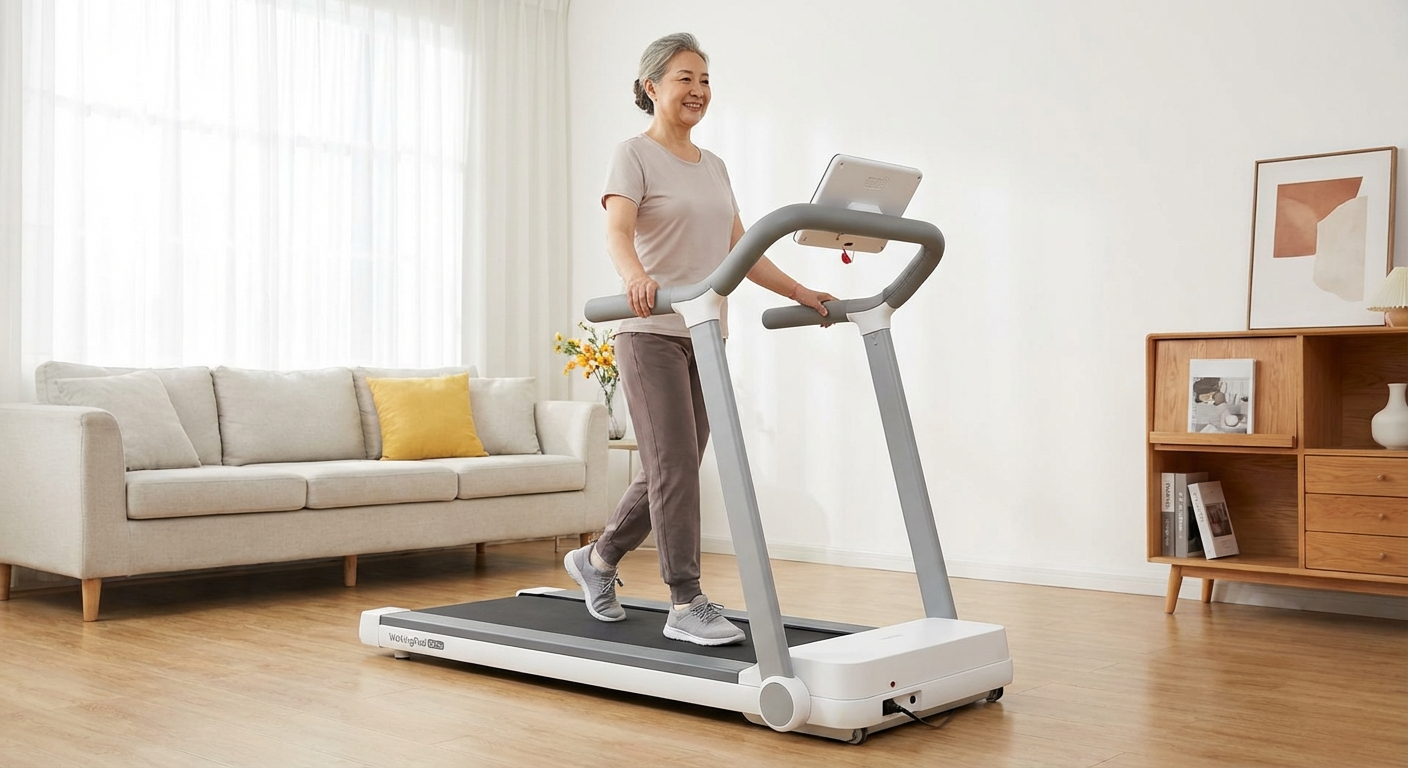
Best Walking Pad for Small Apartments (2026)

Living in a small apartment does not mean giving up daily walking. Walking pads — compact, foldable under-desk treadmills — were essentially designed for exactly this scenario. But not every walking pad is apartment-friendly. Some are too loud for shared walls. Some are too heavy to move in and out of storage daily. And some fold to dimensions that technically "fit" under a bed but require a wrestling match to get there.
This guide evaluates 5 walking pads specifically through the apartment-dweller lens: How small does it actually fold? How loud is it at normal walking speeds? Will it damage my rental floor? And will my landlord care? For a broader comparison of walking pads versus full treadmills, see our walking pad vs treadmill guide.
Note: Floor and noise considerations in this guide are general recommendations. Actual apartment rules vary by landlord and lease. Review your specific lease terms before purchasing exercise equipment.
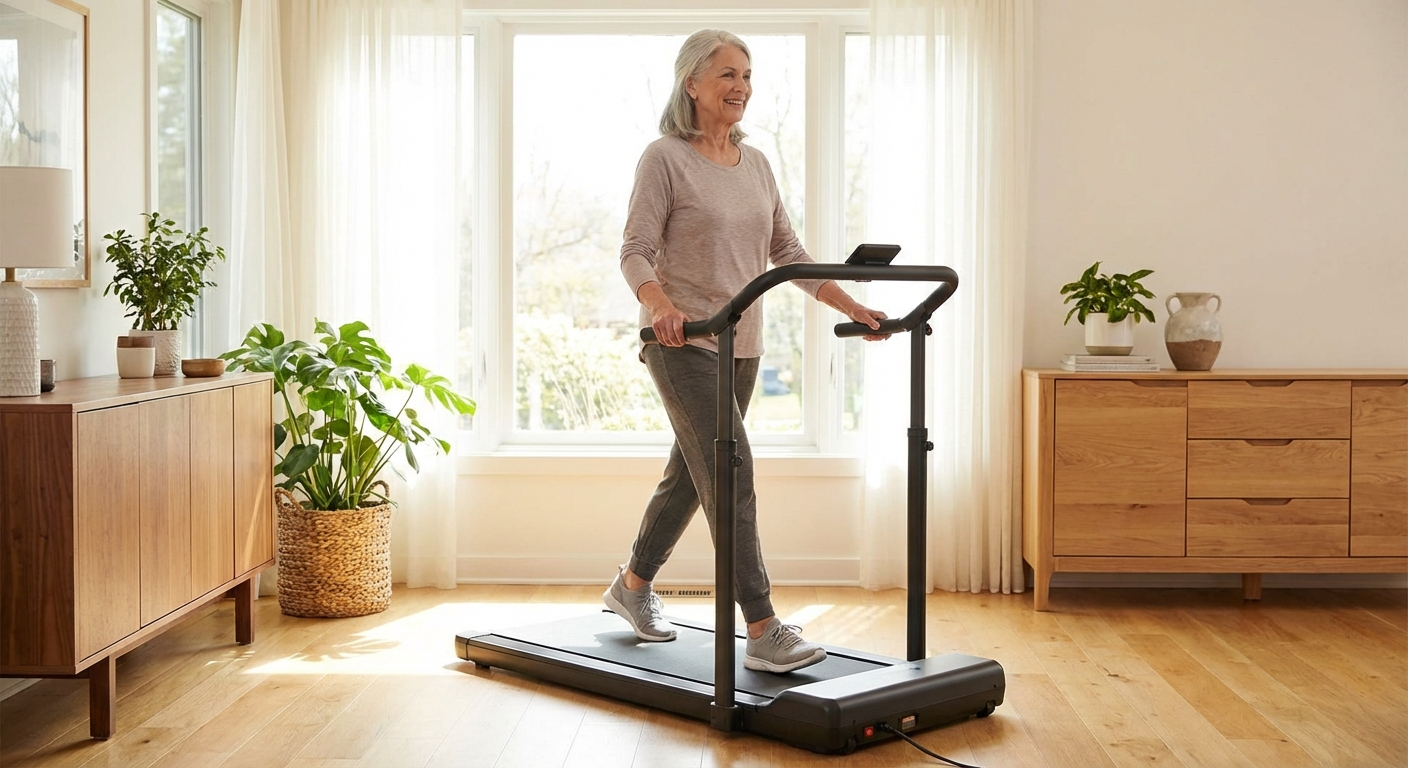
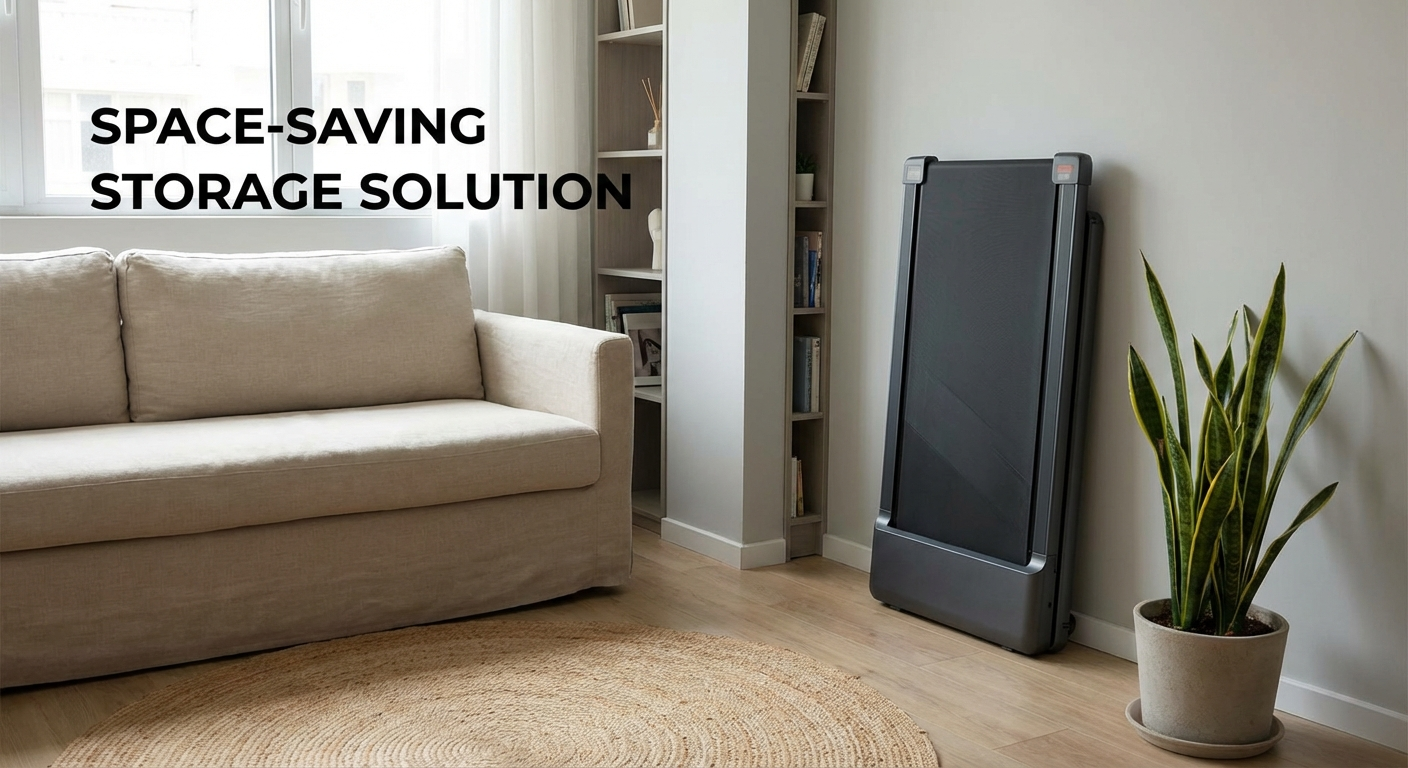 A compact foldable unit can fit real apartment layouts without dominating the room.
What Makes a Walking Pad Apartment-Friendly
Not every "compact" walking pad is truly apartment-friendly. Here are the four criteria that matter most when you are working with limited space and shared walls:
1. Folded Dimensions (Storage Footprint)
The number-one concern for apartment users is where the walking pad goes when you are not using it. The unfolded footprint is roughly the same across all models (about 55–60 inches long, 20–22 inches wide). The difference shows up when folded:
- Under-bed storage requires a folded height of 6 inches or less
- Under-sofa storage requires a folded height of 4 inches or less
- Closet storage requires a footprint narrow enough to stand vertically against a wall (typically under 22 inches wide)
The WalkingPad C2 folds to just 4.7 inches — the thinnest in this roundup. Most competitors fold to 5.5–7 inches, which fits under beds but not under most sofas.
2. Noise Level (Neighbor Relations)
Sound travels through apartment floors, walls, and ceilings. A walking pad that is "quiet" in a house can be disruptive in an apartment — not because of the motor noise you hear, but because of the vibration transmitted through the floor structure.
Walking pad noise has two components:
- Motor noise: 35–55 dB at walking speeds (comparable to a refrigerator). This is generally not an issue.
- Impact noise: Your footsteps on the walking deck transmit vibration through the floor. This is the noise your downstairs neighbor hears, and it is the harder problem to solve.
A thick equipment mat (6mm+ rubber) is the single most effective noise reduction tool for apartment walking pad use. It absorbs impact vibration before it reaches the floor structure. We recommend one for every apartment setup on this list.
3. Weight (Move-In and Daily Handling)
You need to carry it up stairs (no elevator in many older apartment buildings), move it in and out of storage daily, and potentially rearrange it around furniture. Walking pads range from 40 to 80 lbs. For daily storage cycling, under 55 lbs is the practical threshold for most people. Over 60 lbs and you start leaving it out permanently, defeating the purpose of a compact design.
4. Floor Safety (Protecting Your Deposit)
Rental apartments mean security deposits, and landlords inspect floors closely. Walking pads can damage floors through:
- Vibration marks on hardwood or engineered wood
- Heat marks from the motor running on vinyl or laminate
- Indentation from sustained weight on soft flooring
- Scratches from sliding the unit in and out of storage
A protective mat addresses all four concerns. It is a $20–40 investment that protects a $500–2,000 security deposit.
Comparison Table: 5 Best Walking Pads for Small Apartments
| Walking Pad | Folded Dimensions | Weight | Max Speed | Weight Limit | Noise (walking) | Foldable | Price | Best For |
|---|---|---|---|---|---|---|---|---|
| WalkingPad C2 | 32.5" × 21.3" × 4.7" | 56 lbs | 3.7 mph | 220 lbs | ~45 dB | ✅ Flat fold | ~$350 | Best overall for apartments |
| WalkingPad R2 Pro | 39" × 21.7" × 5.3" | 66 lbs | 7.5 mph | 242 lbs | ~50 dB | ✅ Half fold | ~$550 | Best for walk + run |
| UREVO Foldi Mini | 33.5" × 20.5" × 5.1" | 50 lbs | 3.7 mph | 220 lbs | ~48 dB | ✅ Flat fold | ~$180 | Best budget pick |
| Goplus 2-in-1 | 53" × 25.5" × 5.5" | 60 lbs | 7.5 mph | 265 lbs | ~52 dB | ⚠️ Partial fold | ~$250 | Best budget with handles |
| NordicTrack Desk | 72" × 33" × 40" | 195 lbs | 6.0 mph | 300 lbs | ~55 dB | ❌ No | ~$1,000 | Premium home office |
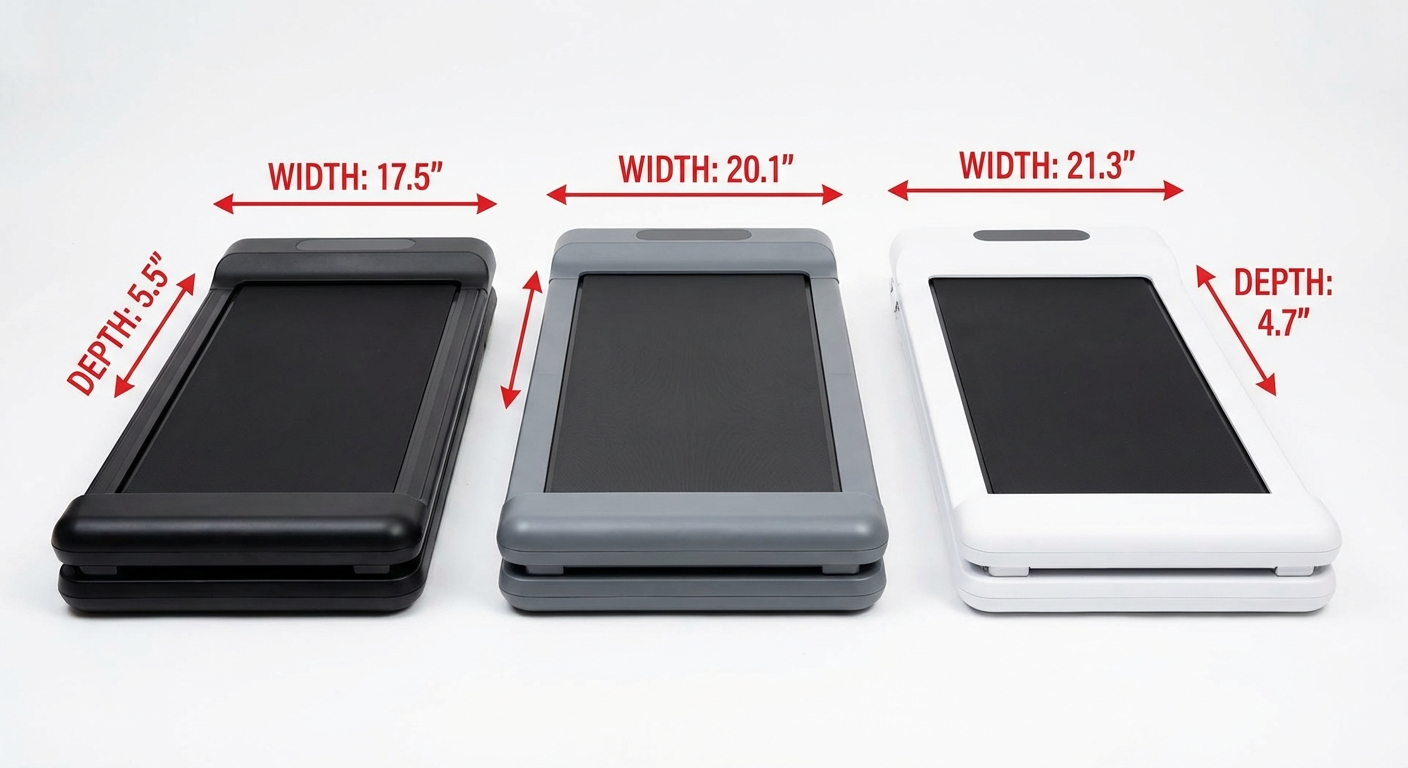 Folded footprint matters more than marketing claims in small apartments.
Detailed Reviews
1. WalkingPad C2 — Best Overall for Apartments
Why it wins for apartments: The C2 was designed from the ground up for small-space living. At 4.7 inches folded, it slides under virtually any bed frame and most sofas. The 56 lb weight is manageable for daily storage cycling, and the flat-fold design means it lies completely horizontal — no awkward angles to work around in tight closets.
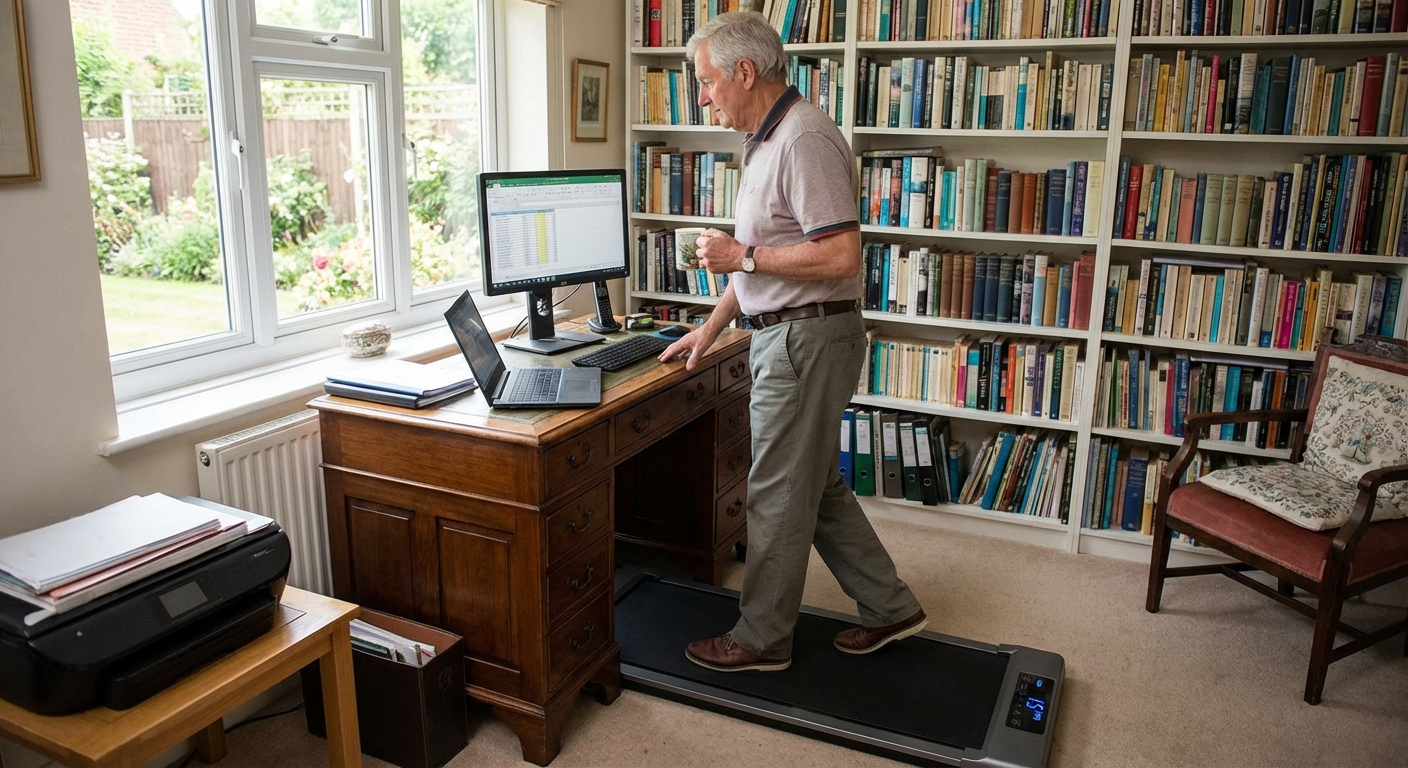
The C2 uses KingSmith's foot-sensing speed control: step toward the front to speed up, step toward the back to slow down. There is no handrail, which keeps the profile slim and means you can walk while working at a standing desk without the rail blocking your workspace.
Tradeoffs:
Pros:
- Thinnest folded profile in this roundup (4.7 inches)
- Foot-sensing speed control — no handrail needed
- Quiet motor at walking speeds (~45 dB)
- Companion app tracks steps, distance, and calories
- LED display embedded in the walking surface
Cons:
- 3.7 mph max speed — walking only, no running
- 220 lb weight limit — check our weight limit guide for safety margins
- No handrail — requires decent balance during the initial adaptation
- Premium price for a walk-only unit (~$350)
- Walking belt is narrower than competitors (16.5 inches)
Best for: Apartment dwellers who prioritize storage compactness above all else. If you need something that genuinely disappears when not in use, the C2 is the one.
2. WalkingPad R2 Pro — Best Walk + Run Combo
Why it is apartment-worthy: The R2 Pro is one of the few compact walking pads that handles both walking and running, maxing out at 7.5 mph. It uses a half-fold design: the rear section folds up and over the front section, roughly halving the length. At 5.3 inches folded, it is slightly thicker than the C2 but still fits under most beds.
The R2 Pro has a foldable handrail that deploys for running mode and folds flat for walking mode. This dual personality makes it genuinely versatile — walk at 2 mph under your desk, then fold out the rail and run at 6 mph for a workout.
Tradeoffs:
Pros:
- Dual-mode: walking (no rail) + running (rail deployed) up to 7.5 mph
- Foldable handrail — lies flat in walk mode for under-desk use
- Stronger motor handles running impact
- Wider belt (18 inches) than the C2
- App connectivity for workout tracking
Cons:
- Heavier at 66 lbs — harder to move daily
- Folded dimensions are larger than the C2 (39 inches long vs. 32.5)
- More expensive (~$550)
- Running mode at 5+ mph generates significantly more noise and vibration
- Half-fold design is bulkier than flat-fold
- 242 lb weight limit may not suit heavier users
Best for: Apartment dwellers who want both a walking pad and a running treadmill in one device. If a 3.7 mph max feels limiting and you want the option to jog, the R2 Pro delivers without requiring a separate full-size treadmill. Read our are walking pads worth it guide for more on the walk-vs-run question.
3. UREVO Foldi Mini — Best Budget Pick
Why it is apartment-worthy: The Foldi Mini hits the critical apartment-friendly benchmarks at roughly half the price of the WalkingPad C2. At 50 lbs, it is the lightest unit on this list — easy to move in and out of storage daily. The flat-fold design shrinks it to 5.1 inches, fitting under most bed frames.
The Foldi Mini is a walk-only pad (3.7 mph max) with a simple LED display and remote control. No app, no foot-sensing — you control speed with the remote or the console buttons. This simplicity is a feature for users who do not want another device paired to their phone.
Tradeoffs:
Pros:
- Lightest unit on this list at 50 lbs — easiest for daily storage cycling
- Budget-friendly at under $200
- Simple controls — remote or console buttons, no app required
- Flat-fold to 5.1 inches
- Adequate noise level (~48 dB at walking speeds)
Cons:
- 220 lb weight limit — limited margin for larger users
- 3.7 mph max — walking only
- No app connectivity or workout tracking
- Build quality is adequate but not premium — plastic components feel cheaper
- Narrower belt than the R2 Pro
- Motor is louder than the C2 at equivalent speeds
Best for: Budget-conscious apartment dwellers who want a functional walking pad for under $200. If you are not sure whether you will stick with the walking habit, the Foldi Mini is the lowest-risk investment. For more affordable options, see our best walking pad under $200 guide.
4. Goplus 2-in-1 — Best Budget With Handles
Why it is apartment-worthy — with caveats: The Goplus 2-in-1 is a budget-friendly dual-mode walking pad that hits 7.5 mph with a foldable handrail. The 265 lb weight limit is the highest among the compact options on this list, making it the best pick for heavier users who need apartment portability.
The caveat: the Goplus is the largest unit here when folded. At 53 inches long, it does not fold in half like the WalkingPad models — the handlebar folds down, but the deck stays full-length. You will need a dedicated storage spot along a wall or behind a large piece of furniture.
Tradeoffs:
Pros:
- Highest weight limit on this list (265 lbs)
- Dual-mode: walk without handles, run with handles
- Budget pricing (~$250) for a dual-mode unit
- Stronger 2.25 HP motor handles running loads
- Wide speed range (0.6–7.5 mph)
Cons:
- Largest folded footprint — 53 inches long, does not fit under beds
- Heaviest compact option at 60 lbs
- Louder motor (~52 dB walking, 60+ dB running)
- Partial fold only — handles fold but deck does not
- Build quality is budget-tier — some rattling at higher speeds
- Not suitable for under-desk walking (handles are always partially visible)
Best for: Apartment dwellers over 220 lbs who need the higher weight limit, or those who want run capability on a budget. Storage requires a wall-length space — this is not a "slide under the bed" machine. For a detailed look at weight considerations, see our walking pad weight limit guide.
5. NordicTrack Treadmill Desk — Premium Home Office
Why it is on this list — with major caveats: The NordicTrack Treadmill Desk is not compact and it does not fold. It is here because it is the best walking pad for apartment dwellers who have a dedicated home office space and want a permanent walk-while-you-work setup. If your apartment has a spare room or a large alcove for an office, this is the premium option.
At 195 lbs and 72 inches long, this is an installation — not something you slide under the bed. It comes with an integrated desk surface, eliminating the need for a separate standing desk. The 300 lb weight limit and commercial-grade motor make it the most robust option here.
Tradeoffs:
Pros:
- Integrated desk surface — no separate standing desk needed
- 300 lb weight limit — highest capacity on this list by far
- Commercial-grade motor — smooth, quiet, and durable
- iFit integration for guided walking workouts
- Up to 6 mph — comfortable walking and light jogging
Cons:
- Not foldable — requires permanent floor space (72" × 33")
- Extremely heavy at 195 lbs — professional delivery recommended
- Premium price (~$1,000)
- Cannot be moved in and out of storage
- Requires a dedicated room or large alcove
- Overkill for casual walkers — this is a commitment
Best for: Remote workers with a dedicated home office in their apartment who want a permanent walk-and-work station. Not for studio apartments or anyone who needs to store equipment out of sight. For working-while-walking advice, see our walking pad while working guide.
Noise Guide: Keeping the Peace With Neighbors
Noise is the make-or-break factor for apartment walking pad use. Here is what you need to know:
Understanding Decibel Levels
| Noise Level | Comparable Sound | Apartment Impact |
|---|---|---|
| 40 dB | Quiet library | Inaudible through floors/walls |
| 45 dB | Refrigerator hum | Barely audible to adjacent units |
| 50 dB | Quiet conversation | Noticeable if neighbor is in a silent room |
| 55 dB | Normal conversation | Audible through thin floors |
| 60 dB | Background music | Likely audible to downstairs neighbors |
| 65+ dB | Vacuum cleaner | Will generate complaints |
Most walking pads at 1–3 mph produce 40–50 dB of motor noise. The problem is not the motor — it is your footstep impact vibration. Every step you take transmits vibration through the walking deck, through the walking pad frame, through your floor, and into your neighbor's ceiling.
How to Minimize Apartment Noise
1. Use a thick equipment mat (most effective). A 6mm+ dense rubber mat absorbs impact vibration before it reaches the floor. This is the single most effective apartment noise solution. Budget: $20–40.
2. Walk at lower speeds. Impact force increases with speed. Walking at 2 mph generates roughly half the impact noise of walking at 4 mph. Stick to 1.5–3 mph during noise-sensitive hours.
3. Wear soft-soled shoes. Running shoes with cushioned soles absorb impact better than flat shoes or bare feet. Counterintuitively, walking barefoot creates more impact transmission than cushioned shoes.
4. Walk during reasonable hours. Even with mitigation, walking pad noise is more noticeable at night when ambient noise drops. Stick to daytime use if you have downstairs neighbors.
5. Position the walking pad on a ground floor if possible. If your apartment has multiple levels, use the walking pad on the lowest floor. Ground-floor units transmit the least impact noise.
Floor Protection: Preventing Damage in Rentals
Your security deposit is at stake. Here is how to protect rental floors from walking pad damage:
By Floor Type
Hardwood: Most vulnerable to vibration marks and scratches. Use a dense rubber mat and felt pads on the walking pad feet. Never drag the walking pad across hardwood — always lift or use furniture sliders.
Laminate/Vinyl: Susceptible to heat marks from the motor running directly on the surface. A mat with thermal insulation properties prevents this. Also vulnerable to indentation from sustained weight — rotate the mat position monthly if possible.
Carpet: Less likely to show damage but creates problems for the walking pad itself (restricted airflow, increased motor strain). Place a hard mat or thin plywood board under the walking pad to create a stable, ventilated surface.
Tile/Concrete: Least vulnerable to damage but amplifies noise. The hard surface reflects impact vibration rather than absorbing it. A thick mat is essential for noise rather than floor protection on tile.
The Essential Equipment Mat
Every apartment walking pad setup should include an equipment mat. Look for:
- Thickness: 6mm minimum, 8mm+ preferred
- Material: Dense rubber (not foam — foam compresses and loses effectiveness)
- Size: At least 12 inches longer and 6 inches wider than your walking pad on each side
- Non-slip bottom: Prevents the mat from shifting on smooth floors
- Budget: $20–40 for adequate quality
Storage Solutions for Small Spaces
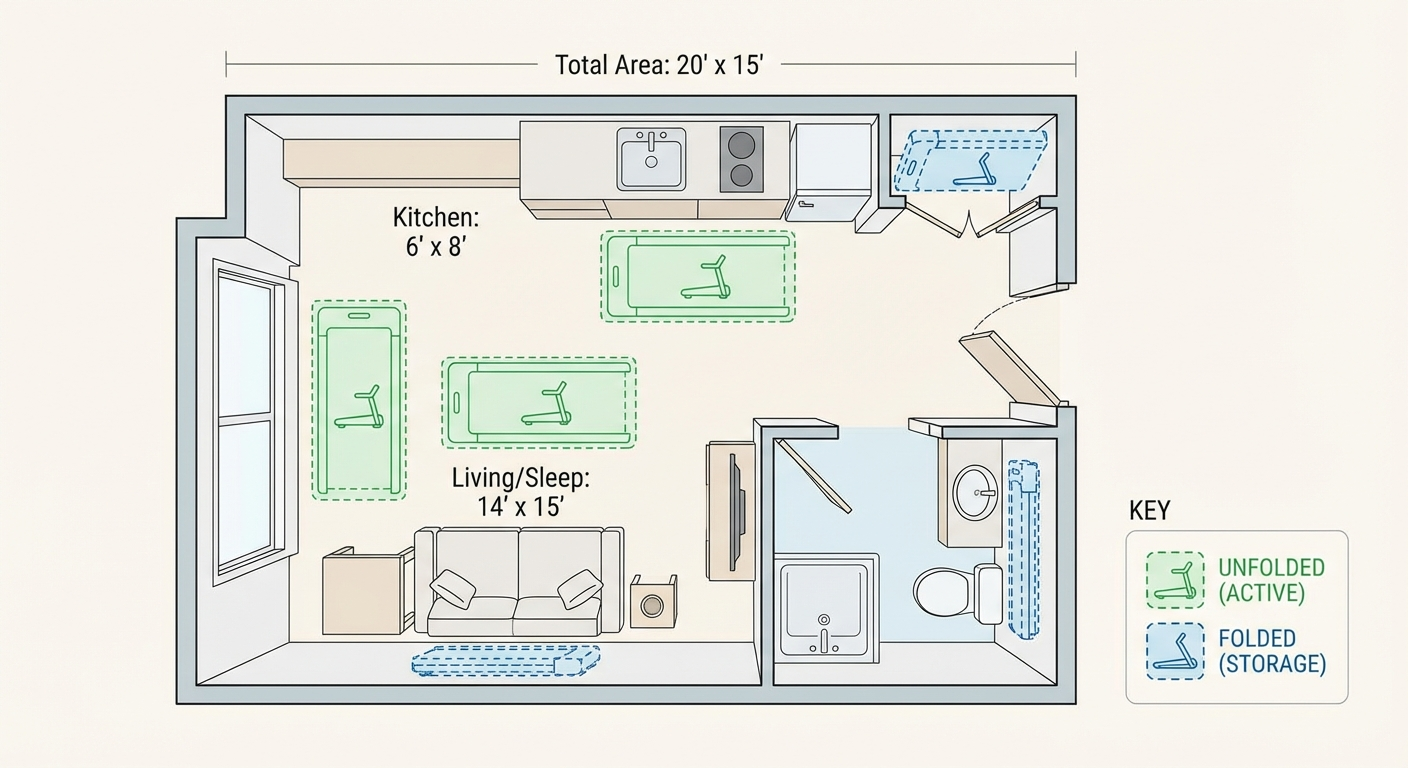
Under-Bed Storage (Most Common)
Works for: WalkingPad C2 (4.7"), UREVO Foldi Mini (5.1"), WalkingPad R2 Pro (5.3")
Measure the clearance under your bed before purchasing. Standard bed frames typically offer 6–8 inches of clearance. Platform beds may offer less. Add 0.5 inches to the walking pad's folded height for the mat if you store them together.
Tip: Use furniture risers ($10–15) to add 3–4 inches of under-bed clearance if your current frame is too low.
Closet Storage (Vertical)
Works for: All foldable models standing on their side
Most walking pads can stand vertically in a closet, leaning against the wall. Use a non-slip pad or wall mount bracket to prevent tipping. This is the best option for apartments without adequate under-bed clearance.
Behind Furniture
Works for: All models, especially the Goplus 2-in-1
The Goplus does not fold short enough for under-bed storage but slides neatly behind a sofa or along a wall. At 5.5 inches folded height, it is roughly the thickness of a couch cushion — visually unobtrusive when positioned behind furniture.
Apartment Lease Compliance
Before buying, check your lease for these common clauses:
Equipment Restrictions
Some leases restrict "heavy exercise equipment" or "gym equipment." Walking pads fall into a gray area — at 50–66 lbs, they weigh less than most bookshelves. If your lease has vague equipment language, consider contacting your landlord. A walking pad is easier to justify than a treadmill: it is lighter, quieter, and designed for walking speeds.
Noise Clauses
Most leases include quiet-hours provisions (typically 10 PM – 8 AM). Walking pad use during quiet hours — even with a mat — may generate enough impact noise to trigger complaints in buildings with thin floors. Restrict use to daytime hours to stay safely within lease terms.
Floor Damage Liability
You are typically responsible for floor damage beyond "normal wear and tear." Walking pad damage (scratches, heat marks, indentation) falls outside normal wear. An equipment mat is not just a recommendation — it is deposit insurance.
Weight Limits
Older apartment buildings may have structural floor load limits. A walking pad (50–66 lbs) plus user (up to 265 lbs) creates a concentrated load of 300+ lbs on a 5-square-foot area. This is well within the structural capacity of any modern building but could be a concern in very old wooden-floor apartments. If unsure, ask your building management.
Frequently Asked Questions
Will a walking pad damage my apartment floor?
Not if you use a protective mat. Walking pads can scratch hardwood and leave marks on vinyl over time from vibration and heat. Place a dense rubber equipment mat (at least 6mm thick) underneath. This also reduces noise transmission to downstairs neighbors and prevents the walking pad from shifting during use.
Are walking pads too loud for apartments?
Most walking pads at walking speeds (1–3 mph) produce 40–55 dB — comparable to a quiet conversation or a refrigerator hum. This is generally apartment-friendly during daytime hours. At higher speeds (4+ mph), noise increases to 55–65 dB. Adding a thick equipment mat and wearing soft-soled shoes significantly reduces noise transmission through floors.
Can my landlord ban walking pads in my apartment?
Most leases do not specifically mention walking pads, but some restrict heavy exercise equipment or impose noise and floor-damage clauses. Walking pads are lightweight (40–60 lbs) and low-impact, making them easier to justify than a full treadmill. Review your lease for equipment restrictions, and consider informing your landlord proactively — especially if you have downstairs neighbors.
Where do I store a walking pad in a small apartment?
Foldable walking pads like the WalkingPad C2 fold to approximately 32 × 21 × 5 inches — thin enough to slide under a bed, behind a sofa, or into a closet. Some users store them vertically against a wall. The key measurement is folded height: under 6 inches fits under most beds, under 4 inches fits under most sofas.
What is the weight limit for apartment-friendly walking pads?
Compact walking pads typically support 220–265 lbs (100–120 kg). The WalkingPad C2 supports 220 lbs, the UREVO Foldi Mini supports 220 lbs, and the Goplus 2-in-1 supports 265 lbs. Always choose a model rated at least 20% above your body weight for safety and motor longevity. See our walking pad weight limit guide for detailed safety analysis.
Do I need a mat under my walking pad in an apartment?
Yes — strongly recommended for three reasons: floor protection (prevents scratches and heat marks), noise reduction (dampens vibration transmitted to downstairs neighbors), and stability (prevents the walking pad from shifting during use). A dense rubber equipment mat (6mm+) costs $20–40 and is worth it for any apartment setup.
Can I use a walking pad on carpet in my apartment?
You can, but it is not ideal. Carpet restricts airflow to the motor, causing it to run hotter and potentially shortening its lifespan. It also increases motor strain, reducing effective weight capacity. If carpet is your only option, place a hard mat or thin plywood board under the walking pad to create a stable, ventilated surface.
How much space do I need to use a walking pad?
While in use, a walking pad needs approximately 60 × 30 inches of floor space, plus 12–18 inches of clearance behind it for safety. That is roughly the footprint of a yoga mat. When folded, compact models shrink to 32 × 21 × 5 inches or less — small enough to store under a bed or in a closet. For more information about integrating walking pads into your workspace, see our walking pad while working guide.
Sources and Methodology
This guide evaluates walking pads specifically for apartment suitability across four dimensions: storage footprint (folded dimensions and weight), noise level (motor and impact noise at walking speeds), floor safety (damage prevention for rental floors), and lease compliance (common restriction clauses).
References:
- Consumer Product Safety Commission: Exercise Equipment Safety — cpsc.gov
- OSHA: Walking-Working Surfaces — osha.gov/walking-working-surfaces
- National Institute of Building Sciences: Residential Floor Load Standards
- Manufacturer product specifications from WalkingPad (KingSmith), UREVO, Goplus, NordicTrack
- Noise level data: referenced against NIOSH Sound Level Meter readings and manufacturer specifications
Methodology notes:
- Folded dimensions are sourced from manufacturer specifications and verified against independent reviews
- Noise levels are approximate and measured at typical walking speeds (2–3 mph) from manufacturer data and user reports; actual noise varies by surface, footwear, and building construction
- Weight limit recommendations follow the 20% safety margin rule consistent across our guides
- Floor protection recommendations are based on common rental damage patterns reported by property managers
- Price data reflects typical retail pricing at time of publication
- We link to Amazon search results to ensure links remain functional; we may earn a commission on purchases at no additional cost to you
- Affiliate relationships do not influence our recommendations
Internal links referenced:
- Walking Pad vs Treadmill
- Are Walking Pads Worth It
- Best Walking Pad Under $200
- Walking Pad While Working
- Walking Pad Weight Limit Guide
Visual Guide Gallery